 Sean Boal
The Mayflower Compact (1620)
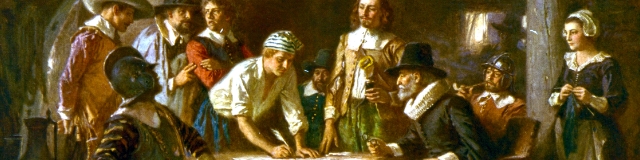
About This Document
The following summary is provided for modern readers. It is not part of the original text.
The Mayflower Compact, signed in 1620 aboard the Mayflower, reflects the Pilgrims’ belief that civil authority is ultimately accountable to God and that communities flourish when they covenant together under shared moral obligations, echoing biblical themes such as mutual submission for the common good (Ephesians 5:21) and the call to walk justly and humbly before God (Micah 6:8). Historically, it marked one of the earliest expressions of self‑government in North America, crafted by settlers who found themselves outside the jurisdiction of their original charter and needed a lawful basis for order. Its simple pledge to form a “civil body politic” shaped later colonial compacts and influenced the development of American constitutional thought. Civically, the Compact stands as an early example of government by consent, demonstrating how free people can bind themselves to just laws for the preservation of peace, responsibility, and the common welfare.
Mayflower Compact (Full Text)
Signed November 11, 1620
In the name of God, Amen. We whose names are underwritten, the loyal subjects of our dread sovereign Lord King James, by the grace of God, of Great Britain, France, and Ireland King, Defender of the Faith, etc.
Having undertaken, for the glory of God, and advancement of the Christian faith, and honour of our King and Country, a voyage to plant the first colony in the northern parts of Virginia; Do by these presents solemnly and mutually, in the presence of God, and one of another, covenant and combine ourselves together into a civil body politic, for our better ordering and preservation and furtherance of the ends aforesaid; and by virtue hereof to enact, constitute, and frame such just and equal laws, ordinances, acts, constitutions and offices, from time to time, as shall be thought most meet and convenient for the general good of the colony; unto which we promise all due submission and obedience.
Signatories
John Carver William Bradford Edward Winslow William Brewster Isaac Allerton Myles Standish John Alden Samuel Fuller Christopher Martin William Mullins William White Richard Warren John Howland Stephen Hopkins Edward Tilley John Tilley Francis Cooke Thomas Rogers Thomas Tinker John Ridgdale Edward Fuller James Chilton John Crackstone John Billington Moses Fletcher John Goodman Degory Priest Thomas Williams Gilbert Winslow Edmund Margesson Peter Browne Richard Clarke Richard Gardiner
Closing Statement
In witness whereof we have hereunto subscribed our names at Cape Cod the 11. of November, in the year of the reign of our sovereign Lord King James, of England, France, and Ireland, the eighteenth, and of Scotland the fifty-fourth, Anno Domini 1620.